Learning to Listen Differently
Introducing Deanne Seitz
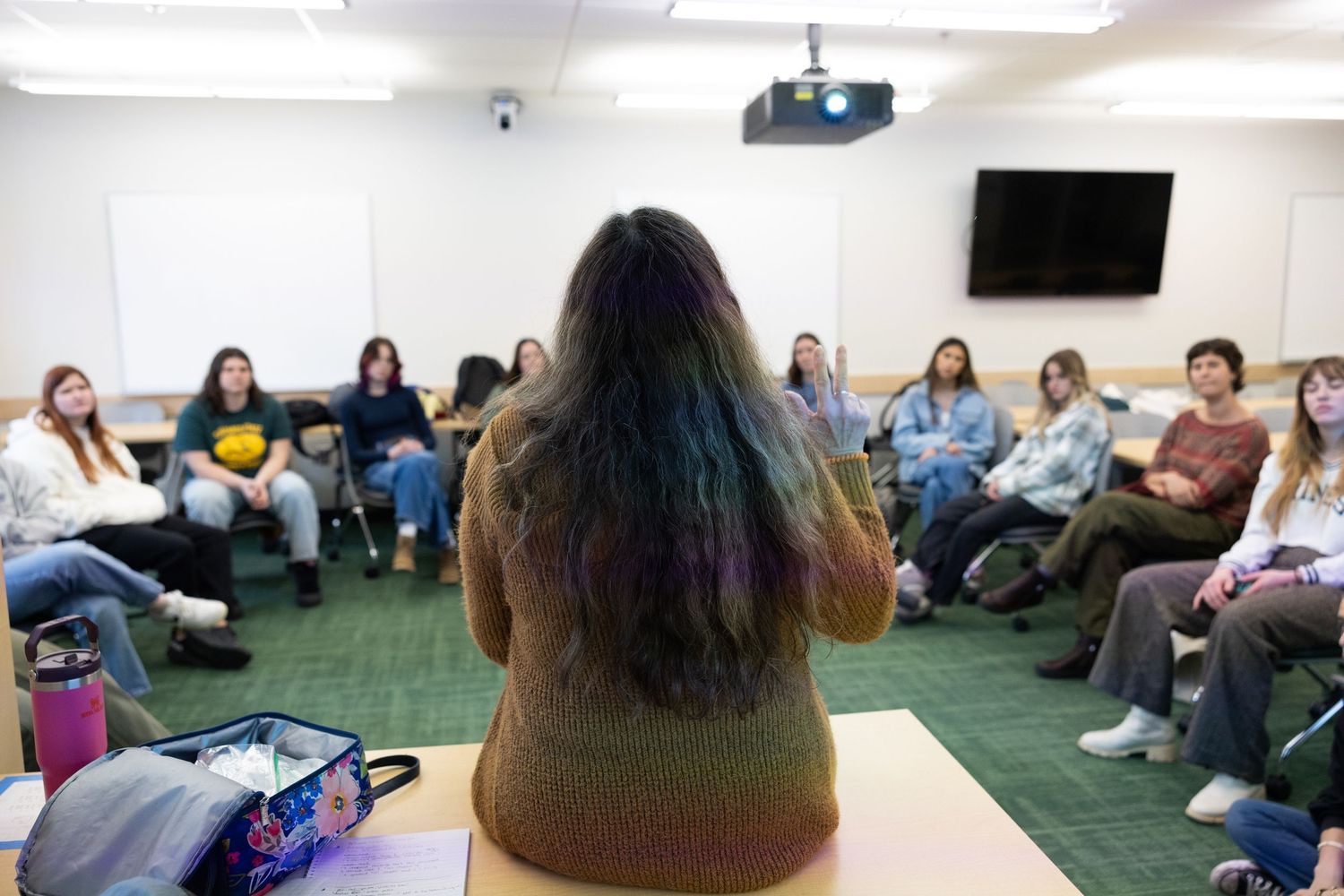
The classroom is quiet before the lecture begins. Backpacks shuffle on the floor and tables rumble as the students sit down. Then Professor Deanne Seitz waves hello and it's all eyes on her. Not a single glance at a phone, not a word spoken, because the attention required is visual.
Seitz is an American Sign Language professor at Colorado State University. She is hard-of-hearing and learned sign language at a young age. She is immersed in the ASL community and actively participates in community events where she teaches people of all ages ASL.
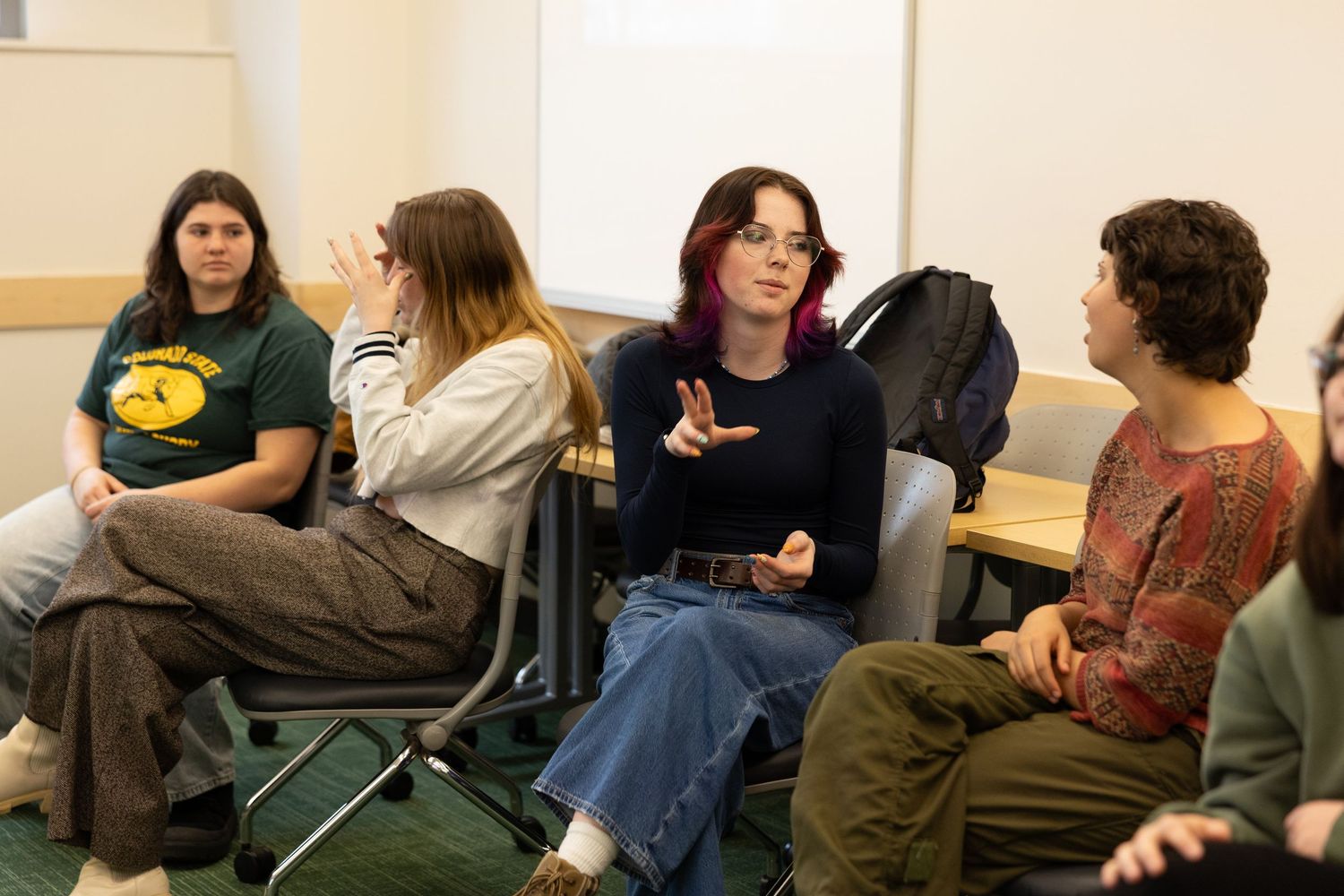
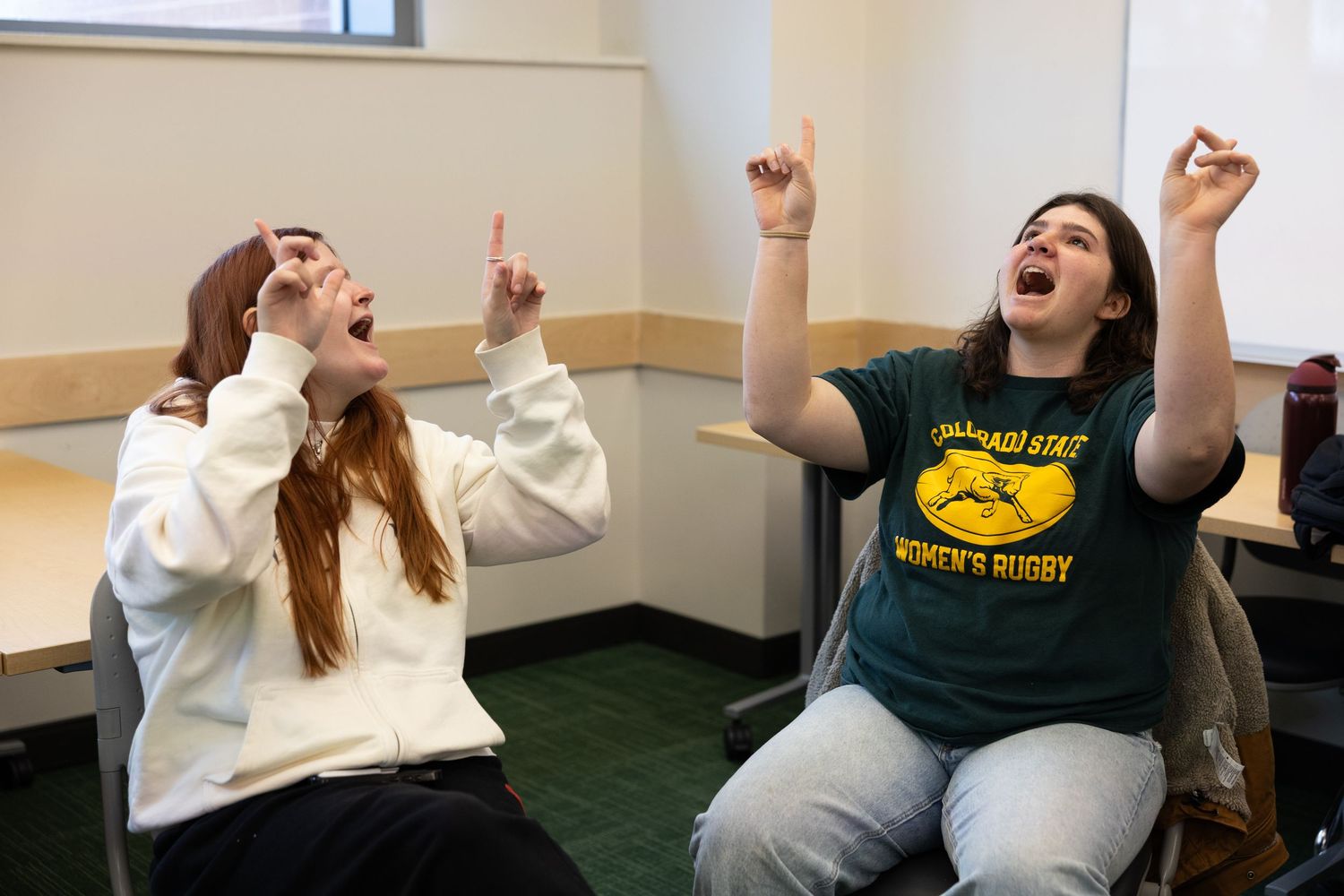
Students practice American Sign Language during a class at Colorado State University in Fort Collins, Colo., on Friday, March 6, 2026. (Photo by McKenna Banks)
Students practice American Sign Language during a class at Colorado State University in Fort Collins, Colo., on Friday, March 6, 2026. (Photo by McKenna Banks)
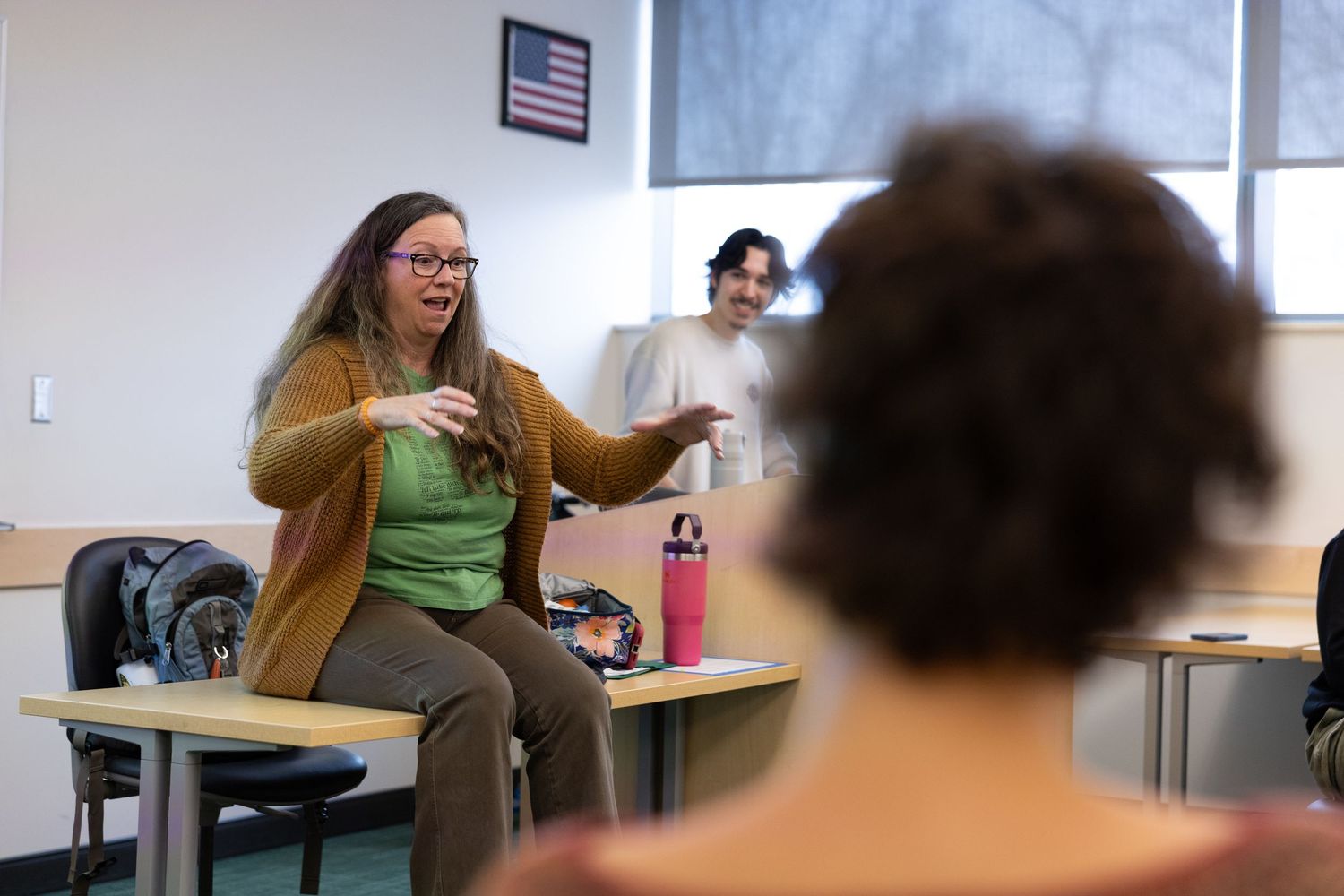
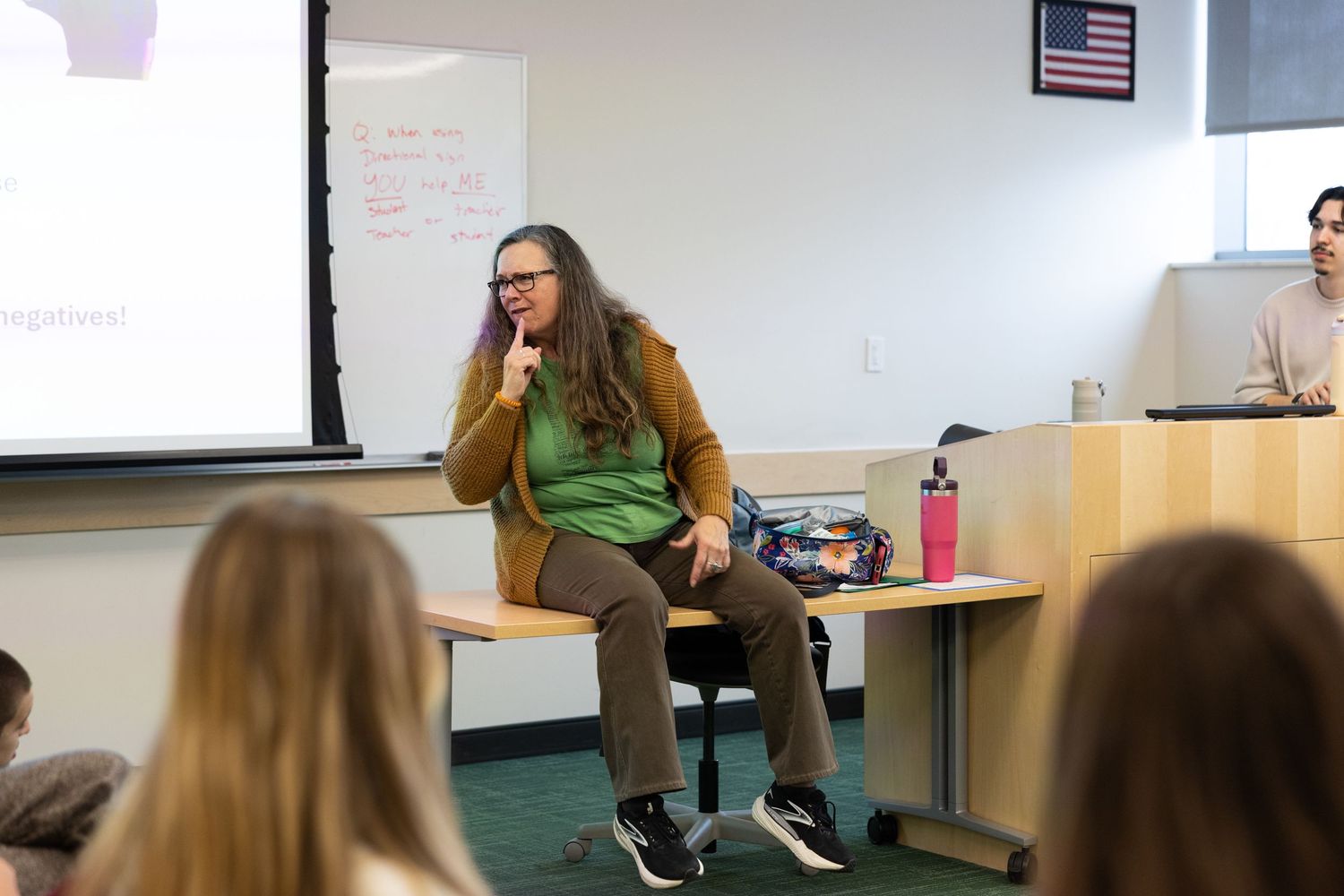
Deanne Seitz teaches an American Sign Language class at Colorado State University in Fort Collins, Colo., on Friday, March 6, 2026. (Photo by McKenna Banks)
Deafness and ASL
What hearing people often assume is that deafness means a loss of sound or communication. They often imagine it as a loss of the ability to communicate, listen to music, and enjoy everyday life. Hearing people often get nervous or frustrated when trying to communicate with someone who is Deaf or hard of hearing. They aren’t sure what to say, so they overpronounce their words and raise their voice. This often makes Deaf people uncomfortable, and they may feel it is unnecessary because they still can’t understand. The lack of knowledge regarding deaf culture is causing frustration on both ends.
The Deaf and hard-of-hearing are a part of a rich cultural community with a visual language that has its own grammar, structure, and syntax, that is recognized by the National Association of the Deaf. Seitz has the ability to immerse herself in both of these worlds and actively switches back and forth between them.
Deaf people prefer direct and clear communication. Courtney Fawns, an ASL student at Colorado State University said “learning to communicate visually changed my understanding of listening.” Many Deaf individuals rely on visual communication including facial expressions, mouth morphemes, body language, and sign language itself.
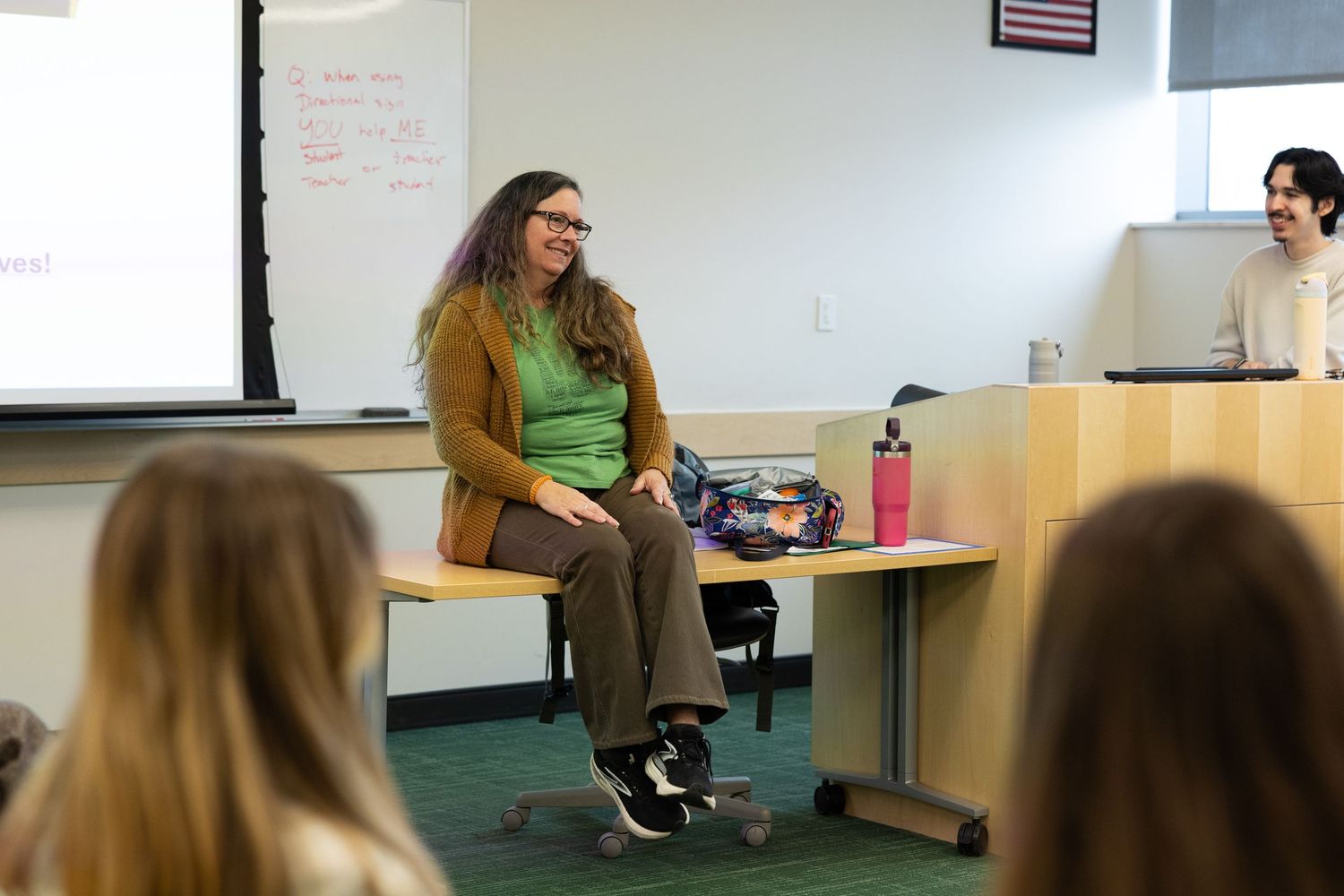
Deanne Seitz pauses during an American Sign Language lecture to admire her class at Colorado State University in Fort Collins, Colo., on Friday, March 6, 2026. (Photo by McKenna Banks)
Communication across the culture
Communication across Deaf culture is expressive, intentional and direct. According to Seitz, “ASL is a visual language. Deaf people are expressive, they tell the whole story every time.” Seitz often communicates to her classes that tone of voice is replaced by body language and movement. She explains “you must set your ASL stage every time you tell a story.” A sign a Deaf person does is full of depth, with features added to it to enhance the sentence.
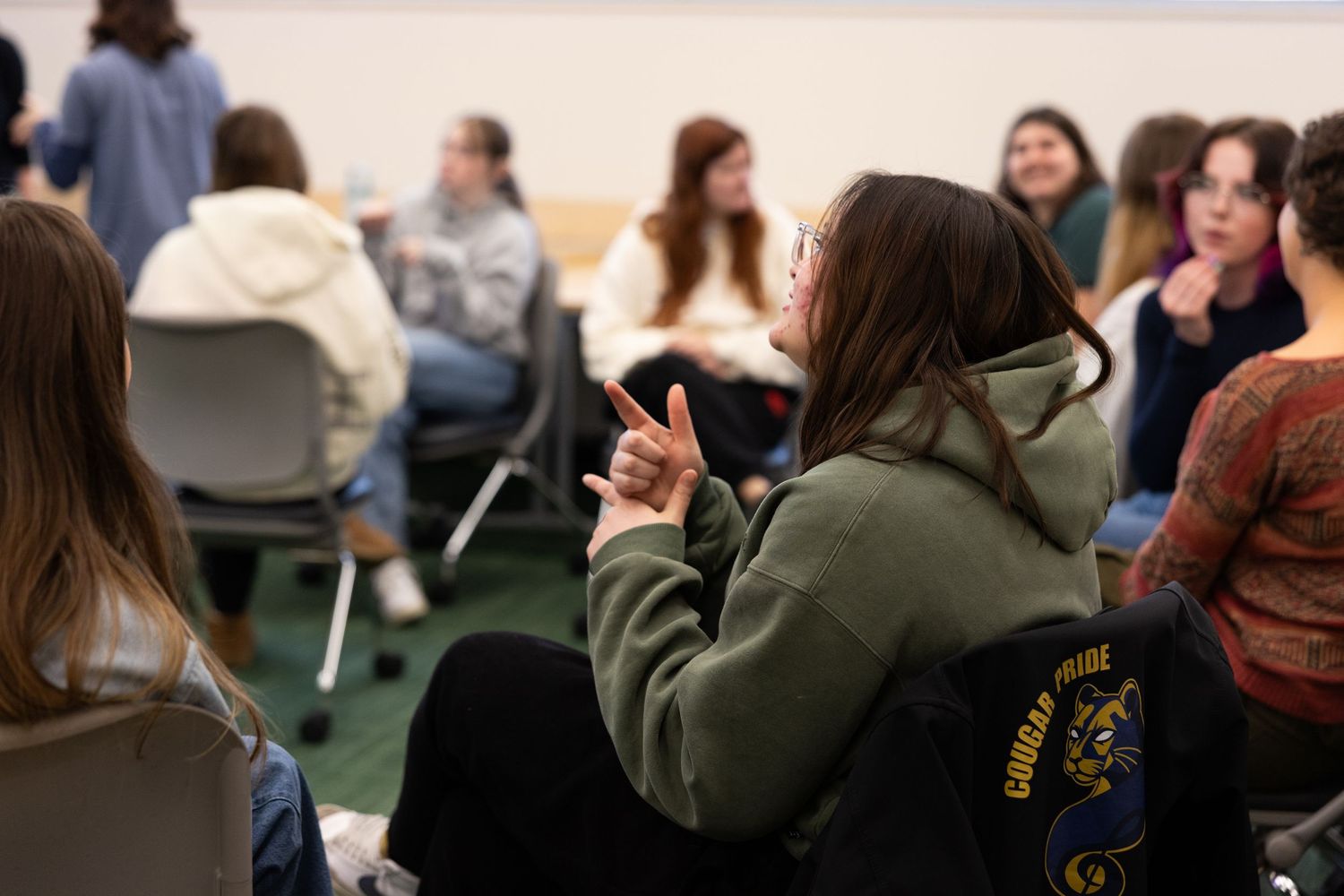
Students practice American Sign Language during a class at Colorado State University in Fort Collins, Colo., on Friday, March 6, 2026. (Photo by McKenna Banks)
Interaction
When interacting with a Deaf person it is best to sign or write things down clearly to communicate. Maintaining eye contact is important because American Sign Language is a visual language and it shows respect. Instead of becoming louder or more noticeable, a polite shoulder tap or wave is enough to gain their attention. In situations of media usage, closed captions, clear lighting, and facing the person makes a huge difference. These small adjustments show respect for Deaf people and their norms.
Controversy
Despite being an advocate for Deafness/ American Sign Language and being hard-of-hearing, Seitz faces criticism for being an ASL professor. Learn more in a one on one conversation with Seitz.
The science behind Hearing
Those who have never experienced hearing loss may never have thought about how the ear and the brain function together. Scientifically, the ability to hear is a very complex neurological function. The National Institute on Deafness and Other Communication Disorders explains that the tiny hairs inside of the ear take sound waves from the world and will turn them into signals that then go to the brain.
When those cells do not function properly or are not present, sound does not register. The absence of hearing does not define the deaf culture. It’s about the presence of expression and visuals.
“As someone who has been hearing all my life, I never could imagine being deaf. Taking ASL classes has given me so much perspective,” said Maya Ross, a Colorado State University student.
Facts you may not know
11,000,000+
People in America who are deaf or have severe hearing loss.
300+
Different versions of sign language. ASL is not a universal language.
2,000,000+
People in America know or use American Sign Language.
10,000+
Signs within the language of ASL.
The power of ASL
Learning to listen differently means recognizing that communication has a deeper meaning than just talking. Deaf culture is not something that needs to be fixed but something that should be respected. For hearing people learning about the world and culture of American Sign Language, it can change their perspective. Instead of forcing Deaf people to adjust to a hearing world, we can adapt to each other. Listening is not about ears but about presence. For many students, like those in Seitz’s classroom, learning ASL becomes a step toward understanding a complex and beautifully unique culture that communicates in a different but equally powerful way.
Learn some American Sign Language signs
Play this game to learn a couple of basic signs for words you use every day!